


-
HOME
-
PRODUCTS
- Smart lewelry
- Stainless steel Jewelry
- Ring
- Necklace
- Earring
- Bracelet
- Hardware & Ceramic Accessories
- Stainless Steel
- Alloy
- Ceramic
- Ceramic Jewelry
- Ring
- Earring
- Bracelet
- Tungsten Jewelry
- Ring
- Bracelet
- Pendant
- Silver Jewelry
- Ring
- Earring
- Necklace
- Titanium Jewelry
- Ring
-
OEM SERVICE
-
CONTACT US
-
ABOUT US
-
NEWS
-
HOME
-
PRODUCTS
- Smart lewelry
- Stainless steel Jewelry
- Ring
- Necklace
- Earring
- Bracelet
- Hardware & Ceramic Accessories
- Stainless Steel
- Alloy
- Ceramic
- Ceramic Jewelry
- Ring
- Earring
- Bracelet
- Tungsten Jewelry
- Ring
- Bracelet
- Pendant
- Silver Jewelry
- Ring
- Earring
- Necklace
- Titanium Jewelry
- Ring
-
OEM SERVICE
-
CONTACT US
-
ABOUT US
-
NEWS
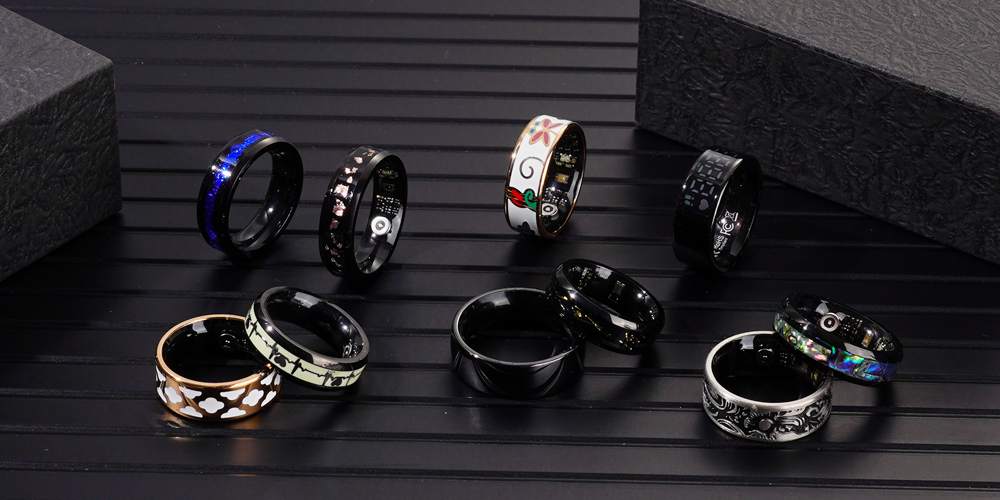
The global smart ring market is experiencing a remarkable surge, emerging as one of the fastest-growing segments in the wearable device industry. Recent data shows that the global market valuation of smart rings reached approximately $348.56 million in 2024 and is projected to hit $417.54 million in 2025, with a compound annual growth rate (CAGR) of 21.1% from 2025 to 2030. This robust growth is not accidental but a result of evolving consumer demands and technological breakthroughs, signaling a promising future for this compact yet powerful device.
A key driver behind the rising popularity of smart rings is the shift toward "invisible health management." Unlike bulkier smartwatches or bracelets, smart rings typically weigh only 3-6 grams and feature a sleek design, enabling all-day and all-night wear without discomfort. This advantage makes them ideal for continuous health monitoring, covering critical metrics such as heart rate, blood oxygen, sleep cycles, and even stress levels through advanced PPG sensors and AI algorithms. For instance, leading products can now screen for sleep apnea with an accuracy of over 90% and predict women’s menstrual cycles with 98% precision, addressing unmet needs in personalized health management.
Technological innovation is further expanding the capabilities and market potential of smart rings. The integration of high-precision micro-sensors and low-power chips has enhanced both monitoring accuracy and battery life, with top models offering 7-12 days of usage on a single charge. Moreover, the industry is moving toward medical-grade certification—brands like Oura have obtained FDA approval, while China’s RingConn has secured Class II medical device certification, allowing smart rings to enter professional healthcare scenarios such as chronic disease management and remote patient monitoring. Cross-scene connectivity is another trend, with products now enabling vehicle authentication and fatigue driving alerts through IoT integration.
The market landscape is also evolving with diverse regional opportunities. North America currently leads with a 34% market share, but the Asia-Pacific region is growing rapidly, driven by high smartphone penetration and rising disposable incomes. China and India boast impressive CAGRs of 31.7% and 34.0% respectively, with local brands like Xiaomi and RingConn gaining significant market share. Additionally, consumer demand is diversifying, with personalized designs (such as dragon silver foil inlay) and gender-specific features (women’s health tracking) becoming key differentiators, catering to both functional and aesthetic needs.
Despite challenges like data privacy concerns and potential market competition from tech giants, the long-term outlook for smart rings remains bright. As health awareness deepens globally and technology continues to advance, smart rings are poised to transition from niche gadgets to essential health companions. With ongoing innovations in AI-driven health insights and medical applications, the smart ring market is set to redefine the wearable technology landscape and unlock enormous growth potential in the years to come.
The Promising Future of Smart Health Rings
Quick Links
Collections
Contact Us
Follow us
